
AI DATA Centers
What can we do?

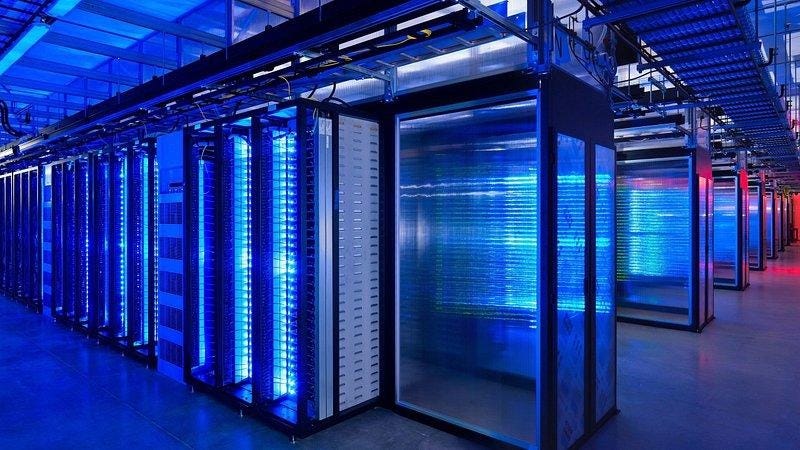
Alberta is courting businesses wanting to set up AI Data Centers and Bitcoin operations. According to Kevin O’Leary - the Alberta government courted him about doing business in Alberta. He was reluctant but Danielle told him she won a court case - a litigation against Gerald Butts in October of 2023 - so she can issue permits for provincial projects.
O’Leary publicly announced “Wonder Valley” south of Grande Prairie in December of 2025. That’s when he invited Danielle to meet Donald Trump at Mar-a-Lago in Florida. He bragged about introducing her to sovereign wealth funds around the world to convince people that Alberta was back in business.
The Sturgeon Lake Cree Nation was not consulted by the province or O’Leary’s company on the Data Center going in.
So where are we at now?
Alberta’s Environmental Protection and Enhancement Act (EPEA) requires screening for certain activities The Director of Alberta Environment and Protected Areas - Laura Graham can make the decision about whether or not a full Environmental Impact Assessment (EIA) is required under Section 44(3).
Laura Graham LinkedIn - Director at Alberta Environment and Parks
Recent decisions of AI Data centers that don’t need to have an EIA done:
Wonder Valley (Grande Prairie): Exempted from EIA. Still requires other permits (air, water, industrial approvals)
Synapse Data Centre (Olds): Bypassed provincial EIA
Mihta Askiy Data Centre (Woodland Cree First Nation-led): Federal Impact Assessment Act screening found no further assessment needed.
The Alberta government frames them as consistent with EPEA while promoting its AI Data Centres Strategy (streamlined approvals, “concierge” service, and support for “bring your own power” projects). alberta.ca
Other permits (e.g., under Water Act, Public Lands Act, or federal rules) still apply.
They have also streamlined Land Fees / Foreign Ownership Restrictions under the Service Alberta and Red Tape Reduction Ministry”
Alberta’s Foreign Ownership of Land Regulations (FOLR) under the Agricultural and Recreational Land Ownership Act generally restrict foreign (non-Canadian or foreign-controlled) entities from owning more than 20 acres of “controlled land” (mostly rural/agricultural).
lawsonlundell.comExemptions exist:
Up to 80 acres for certain industrial/commercial facilities (data centres often qualify).
Data Centres & Alberta Foreign Ownership of Land Regulations (FOLR)For larger projects, the Lieutenant Governor in Council can issue a specific Order in Council under Section 14 of the (FOLR) to exempt a transaction/person.
Reports confirm the province has issued Orders In Council waiving/restricting Alberta’s Foreign Ownership of Land Regulations FOLR application for certain foreign-owned or large-scale data centre projects (e.g., Beacon Indus/related projects in 2025). These are published in the Alberta Gazette and often handled via the Minister of Service Alberta and Red Tape Reduction.
Over 10,000 acres were reportedly approved for foreign entities in 2025 via such exemptions for data centres and related infrastructure.
Other DATA Centres:
Alberta Data Centers - Providers Map in Alberta, Canada - This shows 56 data centers built or being built in Alberta!
Beacon Data Centers - Three Projects - Chestermere, Indus, Foothills
Crusoe AI Data Centres - Three Projects - Myers Energy Park (Near Edmonton), Alsike Energy Park (Red Deer), Crossfield Energy Park.
eStruxture CAL-3 Data Centre - One Project - Calgary - will be the largest data centre in Alberta when completed.
Blindman Industrial Park AI Data Centre - One Project - Red Deer County. Under construction
So with the three that have been exempt from Environmental Impact Assessment and the eight listed in the majorprojects.alberta.ca there are eleven Data Centres scheduled to be built in Alberta.
What are the dangers of AI Data Centres?
The Five Main Concerns re: AI Data Centre
Electricity use - Data centres consume massive amounts of electricity, with US facilities alone using around 183 TWh in 2024, equivalent to over 4% of the nation’s total electricity consumption. (this is enough to power a country the size of Pakistan for a year.) The energy is primarily used to power servers, storage systems, and networking equipment, with around 60% of electricity going directly to IT equipment and the remainder largely for cooling and infrastructure support. What is this going to do in Alberta? They are supposed to bring their own electricity for the Data centres.In Alberta we already pay the highest electricity prices. We have faced brown outs during the winter cold snaps and summer heat waves.
Grid access - Refers to a generator’s or consumer’s physical and regulatory connection to the larger electrical grid. Lack of grid access can hinder renewable energy growth (Alberta has already banned renewables) if a connection is not guaranteed.
Pricing - The cost of electricity will go up.
Reliability - Data centers are the backbone of the digital economy, housing the servers, storage, and networking equipment that support a vast array of online services and applications. The reliability of these facilities is paramount, as downtime can result in significant financial losses and damage to an organization’s reputation. Data centers play a critical role in supporting the modern digital landscape. They provide the infrastructure necessary for storing, processing, and distributing vast amounts of data. The importance of data centers can be seen in their ubiquity, with major cloud providers like Amazon Web Services (AWS), Microsoft Azure, and Google Cloud Platform (GCP) operating numerous large-scale facilities worldwide. Our society has come to rely on Data centres for every day occurrences. We no longer balance a check book or go to the bank to pay bills - now we do most of our business, shopping, etc online which takes vast amount processing.
Water - AI Data centres consume significant amounts of water for their operations. They use between 300 billion and 760 billion litres of water per year. And large data centres can consume between 2 - 5 million gallons per day - which is equivalent to the water use of a town with a population of 10,000 to 50,000. Water is used directly for cooling and indirectly through the water required to produce electricity.
What can we do?
Identify nearby communities potentially affected by new or existing AI data centers, especially marginalized areas with existing industrial burdens.
There are 11 AI Data Centres that we know about being built or planned for Alberta. Many without consultation with the population nearby. They are noisy 24/7/ They also emit light pollution. Alberta Data Centers - Providers Map in Alberta, Canada - This shows 56 data centers built or being built in Alberta!
Communities Are Raising Noise Pollution Concerns About Data Centers | Article | EESI
AI Data Centre Noise Pollution - What does an AI Data Centre sound like?
Communities Are Raising Noise Pollution Concerns About Data Centers | Article | EESI
AI Data Centres Could Emit More CO2 Than Entire Nations | WION Podcast
Investigate the facility’s energy sources, noting reliance on fossil fuels, gas turbines, or diesel generators, which can emit harmful pollutants.
In Alberta, Data Centers are expected to bring their own electricity. Many of them may decide on using Natural Gas to power these systems. This means that the cost of Natural Gas will go up - so Albertans will be paying more. If they make a deal to buy electricity from the grid (in case their system goes down) that will increase what Albertans will be paying as well as leading to brown outs and black outs when there is an increased demand on the grid.
Evaluate potential health risks, including respiratory and cardiovascular impacts from pollutants like fine particulate matter, nitrogen dioxide, and sulfur dioxide.
Research has shown that there is some impact to respiratory and cardio vascular disease due to an increase in AI Data Centers. It also impacts air pollution.
Health Research on Air Pollution and Cardiovascular Disease | US EPA
Health implications of the rapid rise of data centers in Virginia: an exploratory assessment
Check for strain on local water resources due to high consumption by cooling systems.
Data centers truly are resource-ravenous. Even a mid-sized data center consumes as much water as a small town, while larger ones require up to 5 million gallons of water every day—as much as a city of 50,000 people. 1
Monitor grid capacity and connection timelines to determine if the facility’s power needs could cause delays or reliability issues.
This means that we would need a way to monitor how much power was needed at peak times and ensure that the Data Center’s needs were met without impinging on people’s needs.
Engage with local stakeholders—residents, health professionals, and officials—to gather community perspectives on data center operations.
So far in Alberta not a lot of this has been done. The Sturgeon Lake Cree Nation was not consulted by Kevin O’Leary on his Wonderland Data Center. Citizens of Olds Alberta created their own group to research and push back against the Data Center scheduled to be built in their back yard.
Wondervalley
Wonder Valley AI Data Centre Park (Phase 1) - Alberta Major Projects (on the Alberta Government Website)
Olds
Data centre proposal in Olds ‘consuming’ the lives of some living next door | CBC News
Town of Olds CAO addresses public’s concerns over proposed data centres
Barrhead
Alberta’s Barrhead County Moves to Allow Data Centers on Agricultural Land|Idcnova-Media Barrhead moves to allow Data Centers on Agricultural land.
Track environmental policy changes that may alter protections, such as modifications to the Clean Air Act or environmental review processes.
(A reminder that several of these centers have been exempted from an Environmental Review
Alberta waives environmental review for major AI Data Centre )
Environmental Protection and Enhancement Act | Alberta Energy Regulator
Environmental Rights and Principles (Environmental Law Center AB)
Environmental Appeals Board The Environmental Appeals Board - you can appeal decisions through them.
Advocate for transparent reporting and open-source data on AI data center locations, operations, and environmental impacts to support informed decision-making.
This is where you come in.
You can check these pages for information
Alberta Data Centers - Providers Map in Alberta, Canada - This shows 56 data centers built or being built in Alberta!
Orders in Council | Alberta.ca Orders in Council lets you know what is being signed into law.
You can email the Premier, Technology and Innovation Minister, the Environment Minister and your MLA your concerns. Members of the Legislative Assembly
You can email the Prime Minister, the Minister of Technology and your MP your concerns. Contact a Member of Parliament or contact us - House of Commons of Canada
Stay informed - Substack has many good writers that put out information.
Check out the News | Alberta.ca Site for announcements
Get involved with your community so you know when a Data Center might be built near you.
These are the email addresses for Kevin O'Leary and the Wonder Valley team leads (no guides, just express your outrage). Please copy and share these emails to flood them with our disapproval!
For Kevin O'Leary (Mr. Wonderful) himself, his YouTube channel lists the general business inquiry email as info@olearyventures.com
The CEO handling the project is Paul Palandjian. The best route is through the same O'Leary Ventures email (send a separate email anyway 😉): info@olearyventures.com
For the land and gateway side of the project, the Greenview Industrial Gateway's Executive Director is Kyle Reiling, and his direct email is Kyle.Reiling@mdgreenview.ab.ca
Enjoy and, heck, send these guys an email each everyday if you wish!
To: mark.carney@parl.gc.ca
Subject: Wonder Valley — Prime Minister, Canadians Are Watching and Growing Concerned
Dear Prime Minister Carney,
I am writing to you as a Canadian citizen who voted for your government in the spirit of your promise to do things differently — with integrity, with science, and with respect for Indigenous rights. I am writing about Wonder Valley, and I am writing because I believe you need to hear directly from Canadians about what is happening.
The Wonder Valley AI data centre near Grande Prairie, Alberta, is the largest proposed private capital project in Canadian history. It sits on Treaty 8 territory. The Sturgeon Lake Cree Nation has had exactly two meetings with the proponents. Their water licence appeal was dismissed without the Crown ever meaningfully sitting with them. They are now in court, arguing the duty to consult was not met. This is not a fringe complaint — it is a constitutional obligation that your government is bound to uphold regardless of what Alberta's government chooses to do.
Your government's November 2025 Memorandum of Understanding with Alberta has given the province more control over environmental assessments. Yet Alberta exempted Wonder Valley from a provincial Environmental Protection and Enhancement Act review on the grounds that it uses standard power and water systems. A physicist commissioned by the Sturgeon Lake Cree Nation describes the project as one of the largest single-site heat sources on the planet, burning 16 to 18 gigawatts of fuel continuously, producing between 25.7 and 30.5 megatons of emissions annually — levels that would, according to researchers, set Alberta's total emission outputs back approximately 20 years. The region has already declared an agricultural disaster due to drought. The Smoky River watershed is one of Alberta's most historically overdrawn. Twenty-four million cubic metres of water per year would be consumed.
There is also an emerging public health concern you may not yet have been briefed on. Research published in 2026 by the Environmental and Energy Study Institute and reported internationally confirms that large-scale data centres operating natural gas turbines produce continuous noise above 90 decibels and emit infrasound — low-frequency vibrations inaudible to the ear but felt in the body — linked to headaches, nausea, insomnia, anxiety, and cardiovascular harm in nearby residents. Wonder Valley's turbines are, in a physicist's words, essentially jet engines bolted to the ground, running without pause. Without a full environmental and health review, rural Albertans and the Sturgeon Lake Cree Nation have no protection from these harms.
Prime Minister, I say this respectfully and with genuine concern for your government's future: the way Wonder Valley is currently proceeding is eroding public trust — not just in this project, but in your government's commitment to reconciliation and to evidence-based environmental protection. Canadians who supported you are noticing the gap between your stated values and what is being permitted on the ground.
I am asking you to direct the Impact Assessment Agency of Canada to require O'Leary Digital to submit an initial project description, triggering the federal review that the Sturgeon Lake Cree Nation has called for. I am asking you to ensure the duty to consult is meaningfully fulfilled, on the Nation's terms, before any further permits are granted. And I am asking you to ensure that the November MOU with Alberta is not used as a mechanism to sidestep Canada's constitutional obligations to Indigenous peoples.
You have the opportunity to demonstrate that Canada's AI future will be built with integrity. Please take it.
Sincerely,
Mythery
Calgary, Alberta
Treaty 7 Territory
TO BE USED AS A GUIDE IN YOUR OWN WORDS. Am sending this as is. As for the last email guide, use your full name, address, city, province, and postal code.